Information

Artist
Oľga Paštéková

Curator
Barbora Kurek Geržová

Opening
April 18, 2024, 6pm

Duration
April 19 — June 16, 2024

Venue
Youth Gallery

Guided tour
May 18, 2024, 3pm

Download

↘ Press release
↘ Invitation

The painter Oľga Paštéková presents her solo exhibition Parallel Worlds which focuses on the relationship of people and animals, but also the urban and natural environments. The artist researches how our developed civilisation and culture affect the indigenous and wild nature. How they influence and change it. How these two worlds coexist and where their borders lie. Do they overlap, do they exist in harmony, do they lead their parallel lives or do they push each other out?

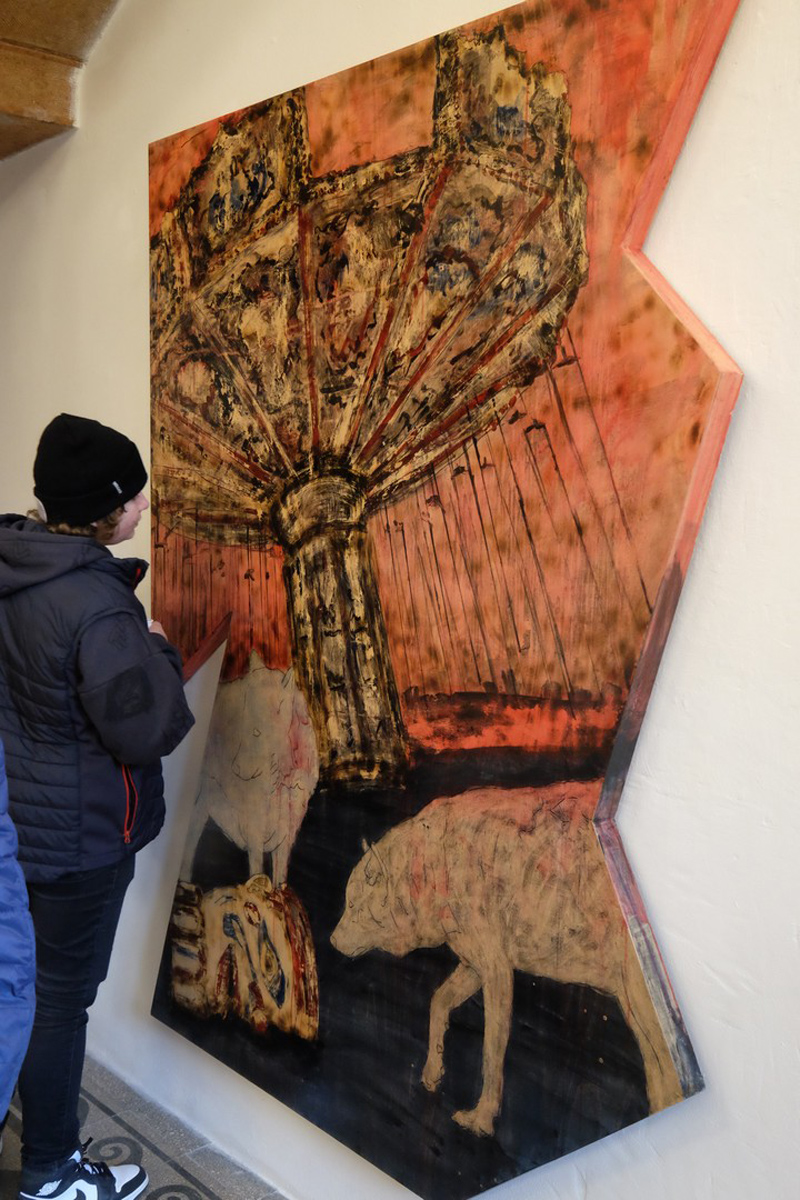
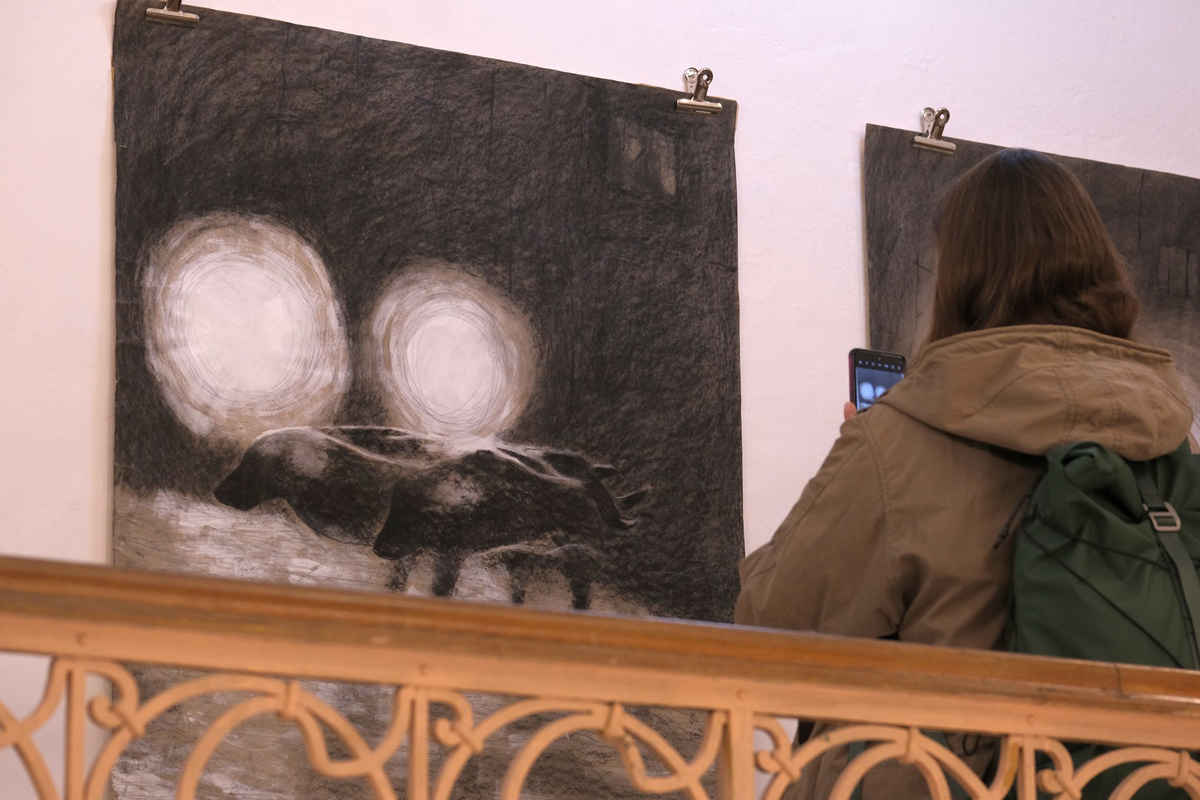
The exhibition will present four series of works which incorporate animals in various kinds of relationships with different urban environments. Some of the oldest pieces include drawings Night Walker – baliačáky which capture quiet night life in the otherwise hectic and also largest subdivision of Petržalka, Bratislava. Its concrete and impersonal architecture seems gentler and more hospitable, more humane. A single territory is shared by people walking their pet dogs, which at certain point turn into “wild wolves” as they find themselves under “attack” by streetlight pollution. The artist’s series of paintings titled In Wonderland reflects upon former, currently closed-down amusement parks and presents them as a relic of artificial, human interference into the natural environment.

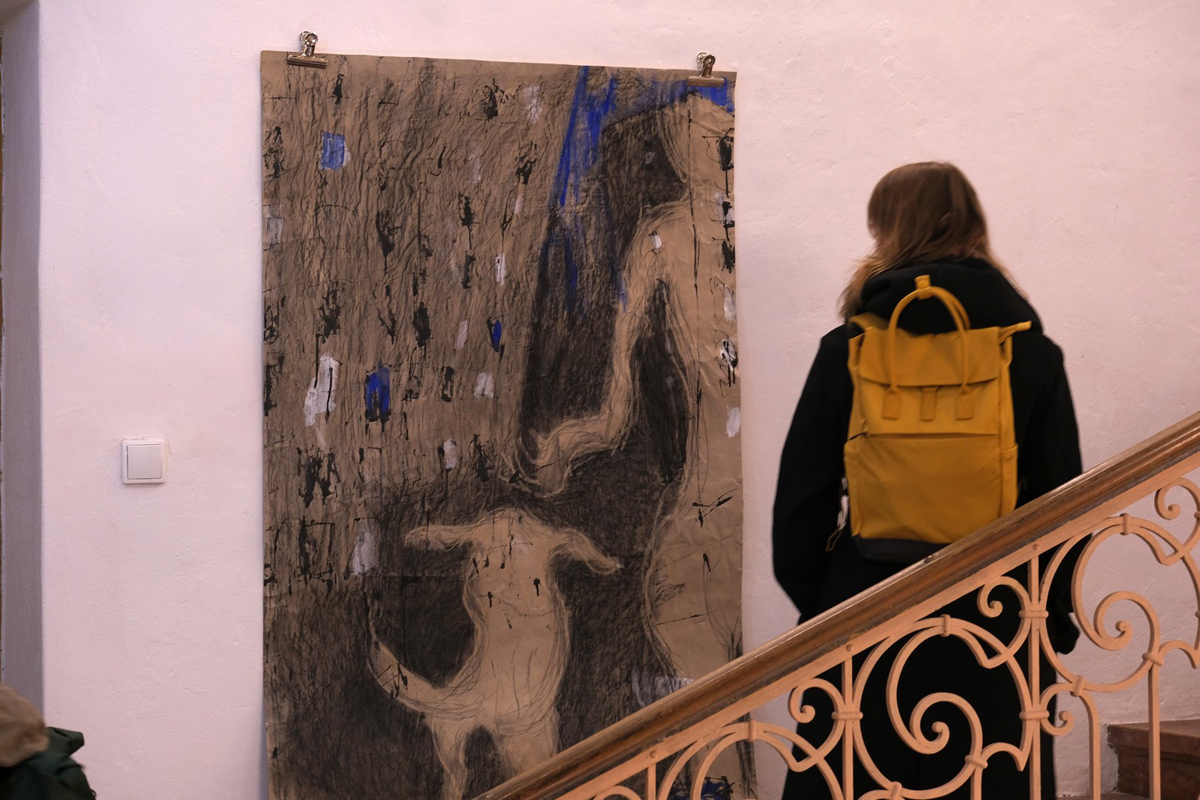
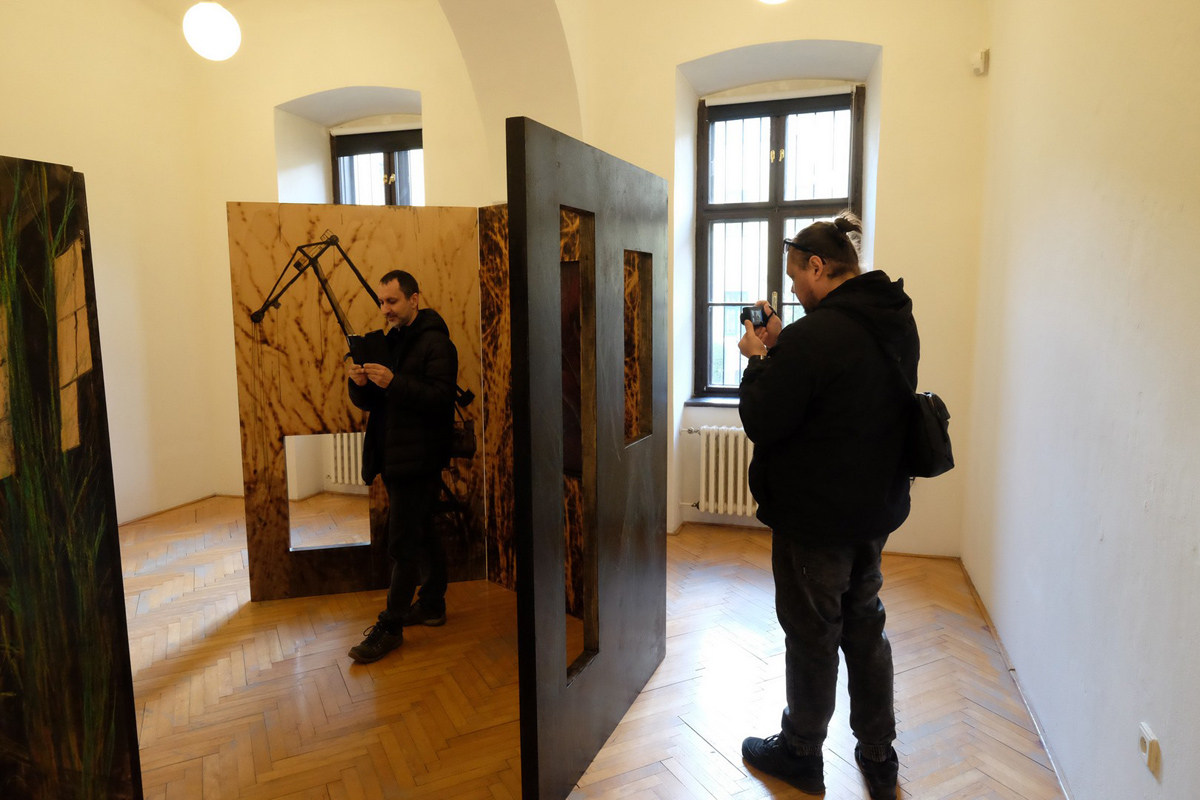
These originally crowded and noisy places have turned into abandoned attractions. They have been given another chance by the invincible nature and wildlife which have “recycled” them into their homes and living spaces. A similar approach has been also used in the painter’s large-format installation titled Fragile Balance, which shows abandoned, decaying industrial premises, as products of human activity and symbols of our expanding civilisation, under the rule of the animal kingdom. The exhibition concludes with a series of large-format pieces titled If You Became Naked, which merges the world of man and the world of animals by turning man into an animal. Or is it the other way around? 

Oľga Paštéková (*1984) studied painting at the Academy of Fine Arts and Design in Bratislava at studios led by prof. Ivan Csudai, Daniel Fischer and Vladimír Popovič (2003 – 2009). In 2008, she studied at Akademie der bildenden Künste in Vienna at a studio led by prof. Daniel Richter. She has participated at dozens of solo and group exhibitions and numerous art and environmental projects. She has been a finalist of the Painting of the Year award (2009, 2012, 2013) and a part of the selection for Strabag Artaward International (2022). Her works can be found across various galleries in Slovakia (The Orava Gallery in Dolny Kubin, Bratislava City Gallery, Kysuce Gallery in Oščadnica) and abroad (Imago Mundi/Luciano Benetton Foundation, Treviso, AA collections, Wien; UBIK Space, Wien). She lives and works in Bratislava and Vienna.

Interview With the Artist Oľga Paštéková by the Exhibition Curator Barbora Kurek Geržová

Barbora Kurek Geržová: In your work, you often turn to the medium of painting which you expand to object and installation. What does painting mean to you if we consider your early images used to be more black and white, or rather made use of the whole grey spectrum?

Oľga Paštéková: I enjoy creating these landscapes that tend to encompass man. I position the traditional hanging image into new contexts. Whether it is about disrupting its form or a new situation in space. It is meant to surprise – disturb – the viewer, make it jump out at them. It makes their relationship to it more effective, more direct.

You often use the painting technique of burning into wood, but also paper. Why this technique? Is it just to make it more interesting or are there other reasons that might relate to the expressiveness of your works?

I always look for new methods and techniques, I go beyond the borders of the traditional medium. It began with wrapping paper, doors from a landfill, then hardboard and canvas. I have used asphalt, oil, acrylic, ink, scratching, pencil, concealer, destruction. There was a series of images on wood and then fire came. I started adopting it slowly, with respect, but today I am not afraid of using it as a medium equal to painting. I have purposefully focused on using fire in my recent experiments. I have created images on paper, together with a unique agent – lemon. To me, fire symbolises something lost, destroyed, but at the same time also renewal – a new life. Right now, I am captivated by the technique of airbrush, which I apply on canvas. 

Your works often tend to feature one specific animal species – the WOLF. Why this animal?

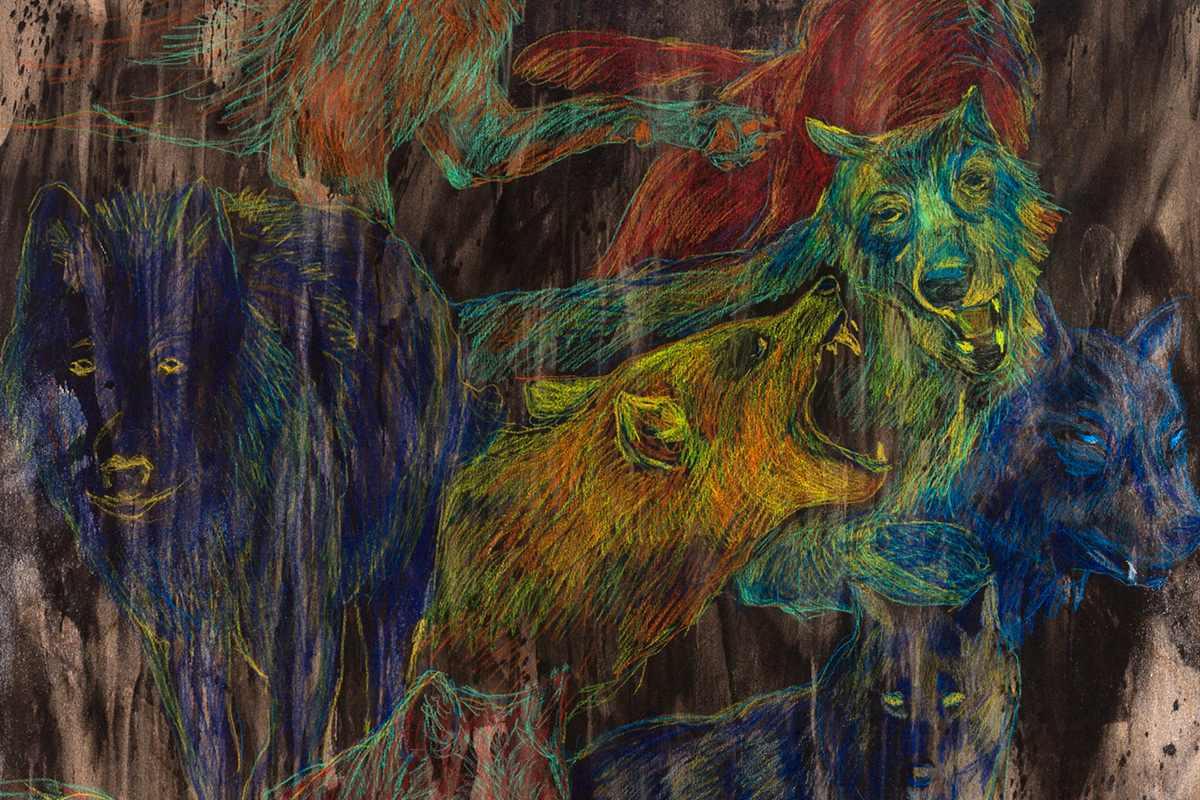
It began during my childhood – with a wolf. And it has turned into an icon of my work. But then I gradually started adding other creatures of our forests – especially the “bad ones”. They are exactly “those” bad creatures we hear about daily while listening to the news. Predators like bears, lynx, eagles and wolves play an important part in the natural balance of fauna, but people often perceive them with prejudice, poison them and kill them brutally. However, any specific experiences or even personal encounters with those silent faces provide just the baseline of my works. It is not about depicting reality, bur rather expressing my imagination and inner feelings. The beings of my images are my associates, companions, perhaps even guides, as they used to be during ancient animism… I usually work at night – and they are with me… It then has an effect on how I function during the day.

The Night Walker – Baliačáky series takes place in Petržalka. What is your relationship to this place?

I grew up in Petržalka and it is where I have lived ever since. It was my first and very strong inspiration for so many years. The windows that light up when it gets dark. The flats housing numerous fates and narratives. The contrast between the geometry and sharp edges of buildings and the irregularity of trees is visually exciting. 

What inspired you to create the In Wonderland series?

The In Wonderland series has a strictly apocalyptic quality to it. It is like “the day after”. It is based on our anxiety and concerns about what is happening with nature. While visiting abandoned amusement parks, I experienced many doomsday and contradicting feelings which are ultimately reflected in my images.

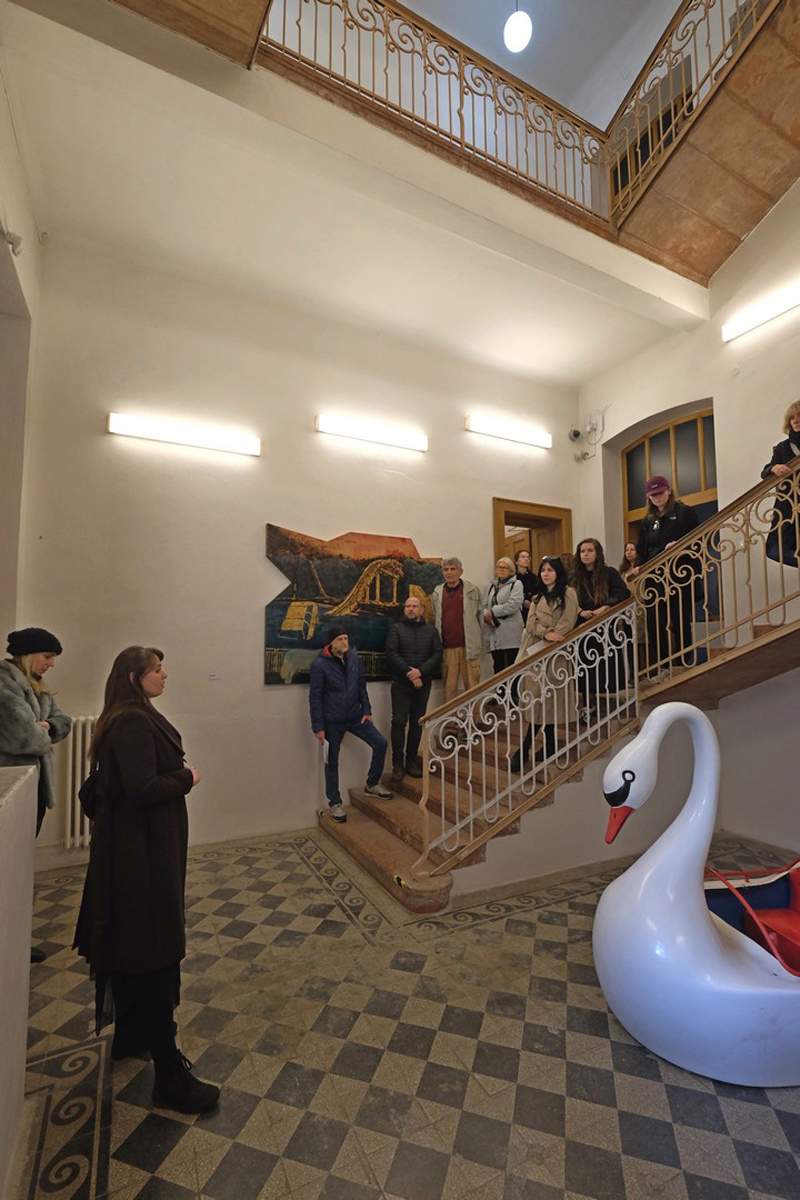
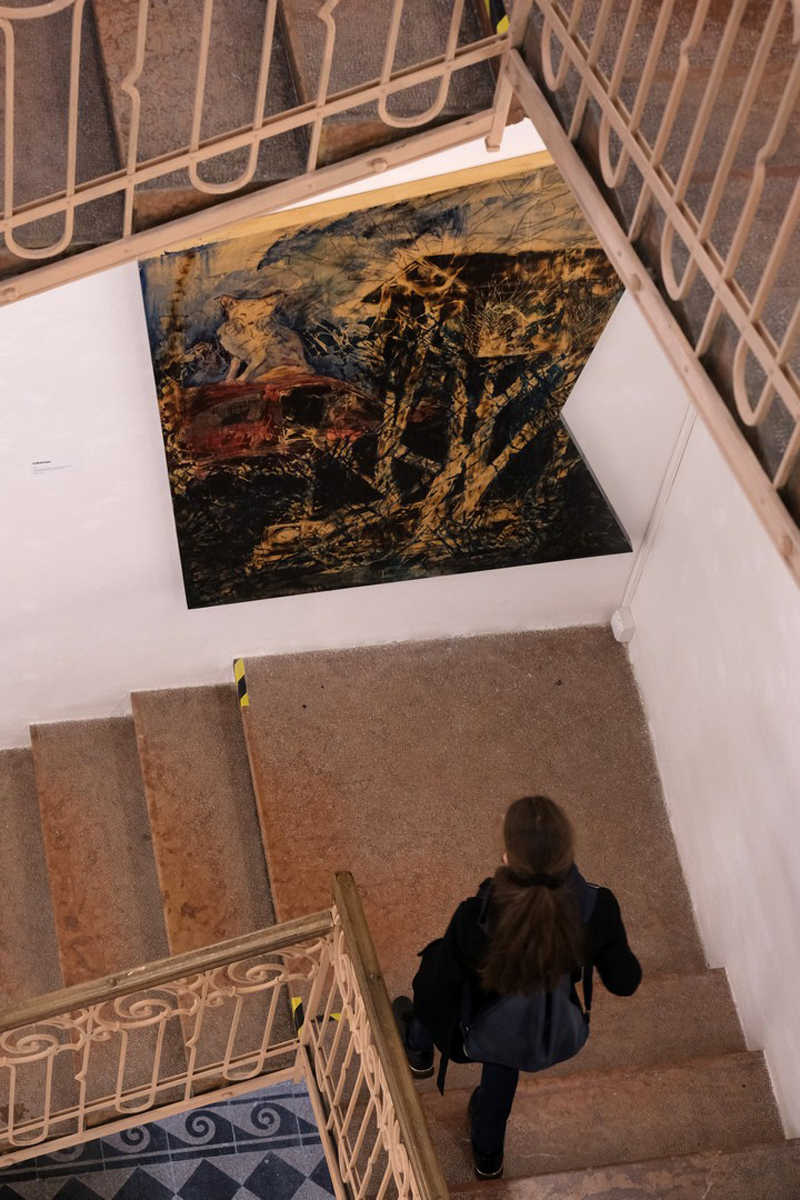
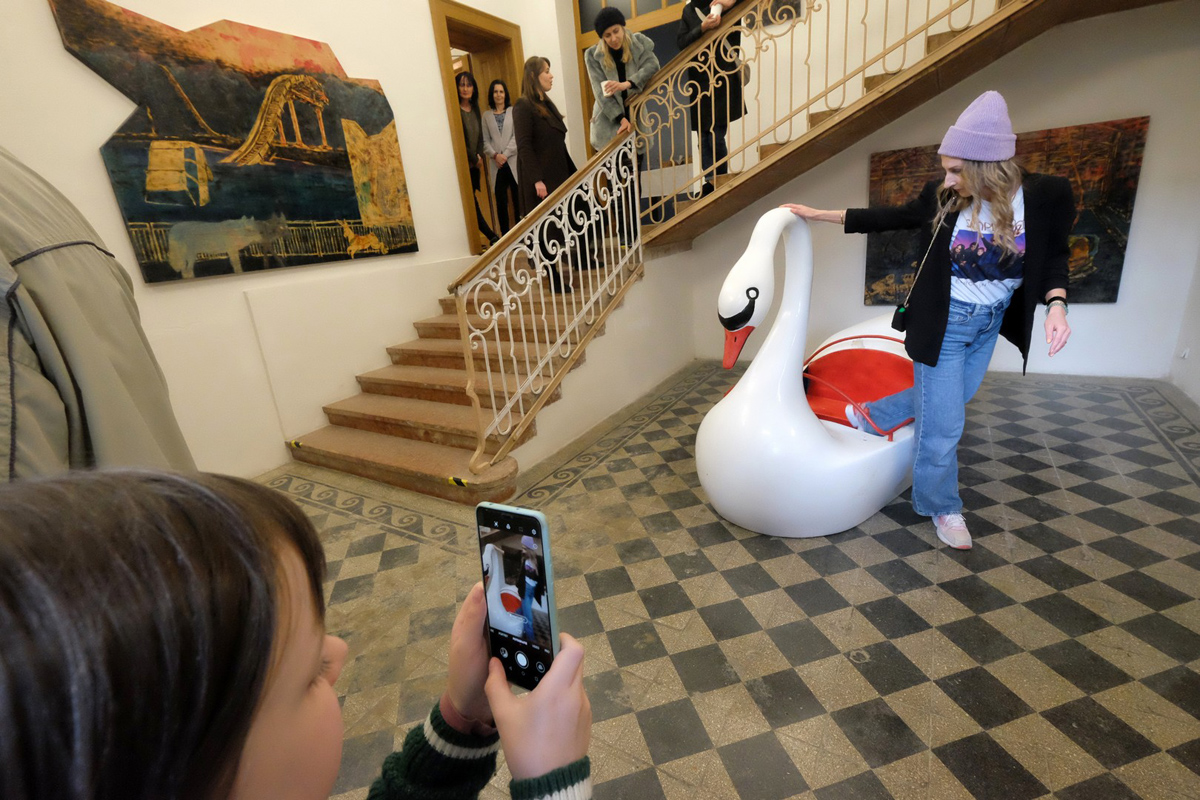
I have drawn inspiration from specific abandoned parks, such as the Spreepark in Berlin or the Six Flags park in New Orleans, USA. These decaying places are being “eaten” by plants and nature. The Six Flags amusement park was destroyed by Hurricane Katrina in 2005. The whole area got flooded and it has gradually become a home to various wildlife. From crocodiles to snakes, racoons and wild bees. It started living a new life. As if it was a wonderland, which is why I named the whole series In Wonderland. There is an expression that describes it perfectly – reclaimed by nature, which means a regeneration or rebirth of nature. That is why my images depict flooded capsized cars in the middle of an amusement park. A fox sitting on a car wreck with its metal body parts overgrown by plants and squeezing the cars and remains of structures which used to stand there, made by man. The sky is symbolically burning red and together with my wood burning techniques, they even emphasise the post-apocalyptic mood. One image shows two wolves approaching an inanimate bunny on a carousel. Even the first image of the series depicts a wolf meeting a plastic swan – a figurine.

It is reminiscent of Alice in Wonderland. Other predators are coming to take a look at a clown’s head that has fallen off of a chain carrousel. On one side, there are inanimate masks, figurines of various shapes, broken into different parts and on the other one, the advancing jungle with animals, birds and predators. 

It raises the question whether people and animals have to live separately. Whether these animals are not just trying to get closer to us. You may also notice the images have various zigzag shapes. It symbolises broken pieces, fragments of something shattered. 

What kind of stories are told by your large-scale panel installation titled Fragile Balance which merges the two worlds – of people and animals? 

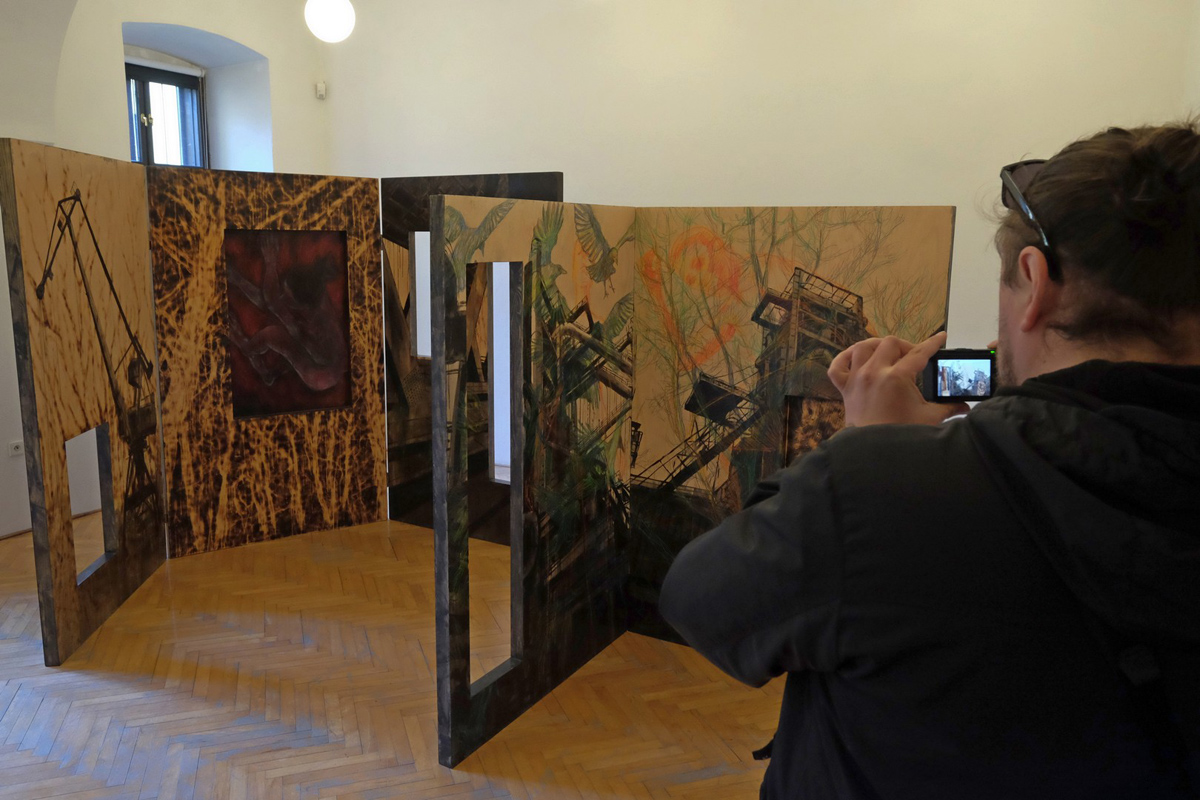
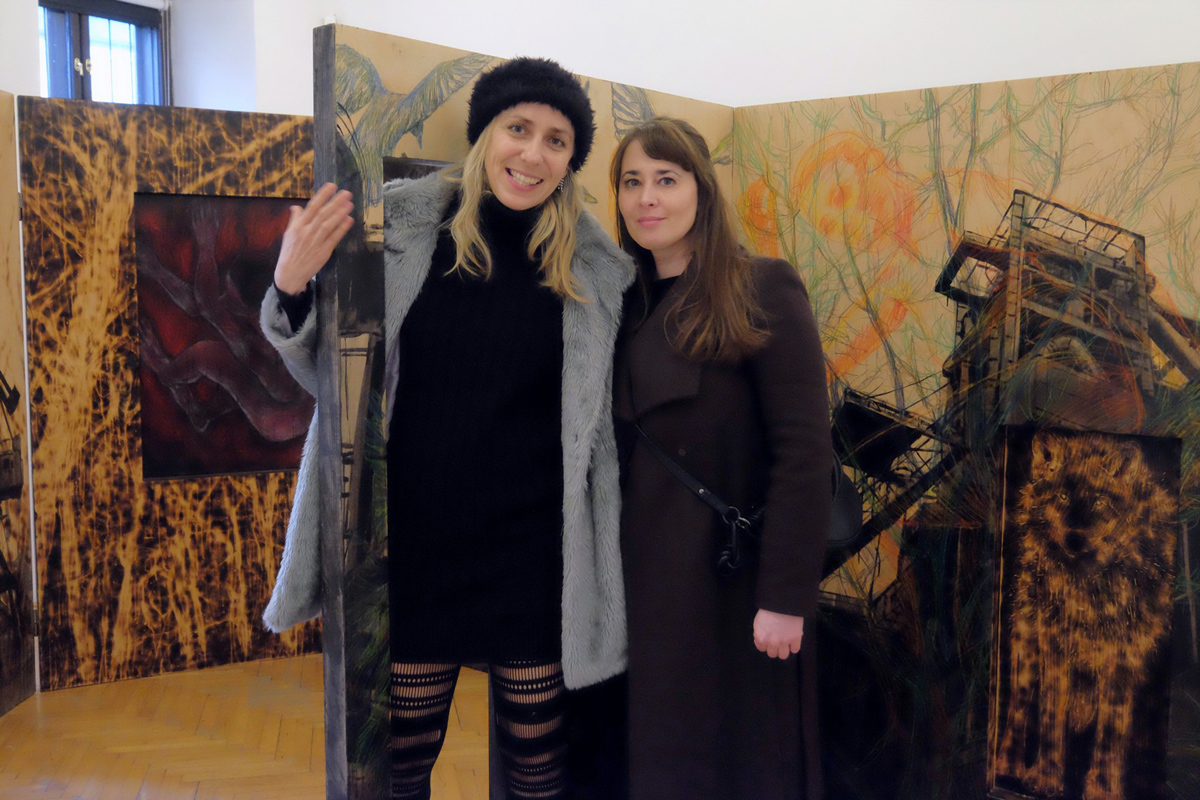
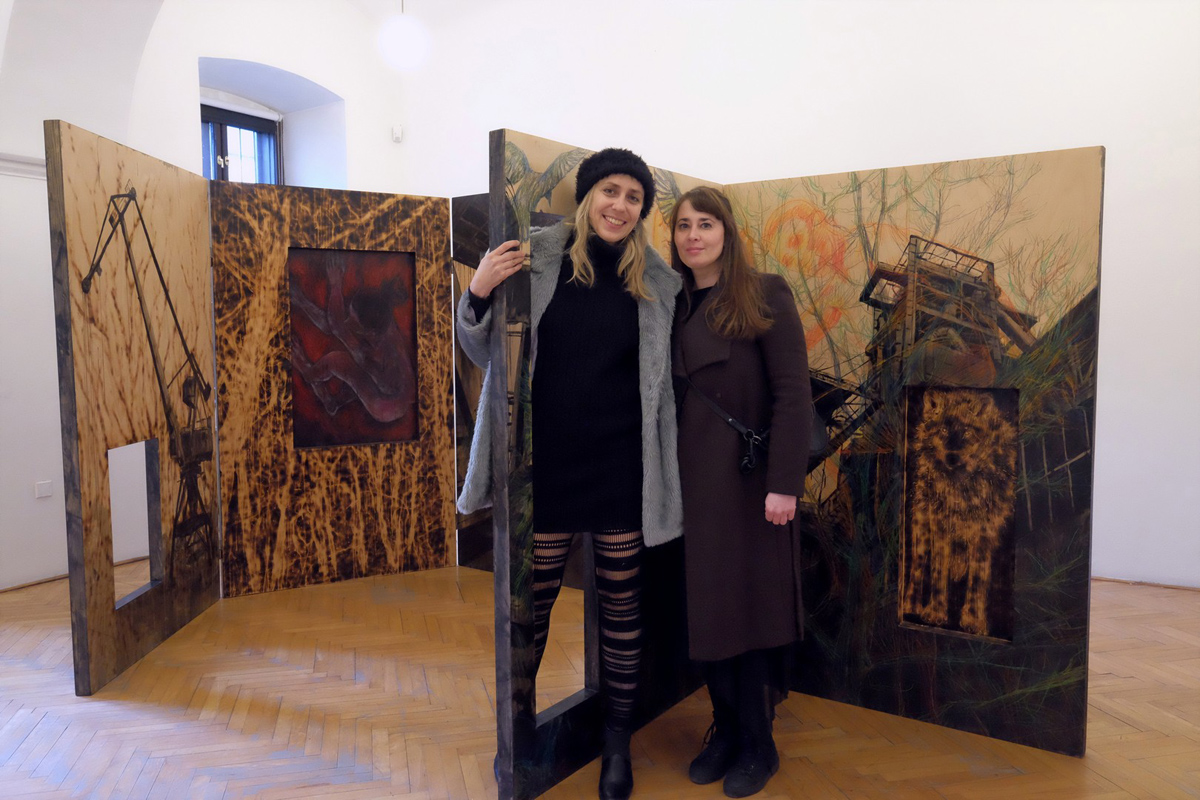
The In Wonderland series is immediately followed by the spatial installation made of wooden panels titled Fragile Balance. It is based on the tension between civilisation and nature. Between man – the creator of architecture and animal – the representative of nature. It incorporates several important plans which make use of different media – acrylic painting, burning, carving and coloured-pencil drawing. The images surround the viewer and ask certain questions. They also present nature as indestructible and invincible. The installation is purposefully positioned as a protest, obstructing the viewer’s freedom of movement and talking to them that way…

The latest of my series like In Wonderland and Fragile Balance are a part of a larger narrative that focuses on age-old processes, the lifecycle of the entire planet. 

The exhibition peaks with a series of drawings titled If You Became Naked where man turns into animal. What led you to it? What kind of thought processes preceded this blending of two worlds?

These are drawings where a figure literally blends into or interchanges with an animal. It is a case of an absolute culmination of togetherness. There is some kind of confidentiality agreement between them – a feeling of threat, but also transformation.

To what degree do your works respond to the climate crisis and the threat it poses to our society? 

For a long time, my work has been responding to the relationship of man to his surroundings – specifically to fauna and flora –, the reasons and consequences of his doing. My interests in ecology and efforts to change things are also apparent outside of exhibition halls. I have been cooperating with environmental associations, like the WOLF Forest Protection Movement. I invited Erik Baláž to have an open debate during my exhibition at Bratislava City Gallery. I keep in touch with the Czech movement DUHA, which focuses on the return of predators to Czech forests. Nature can live without us, but we cannot live without nature. 

In cooperation with 3D Real — Virtuálne prehliadky.

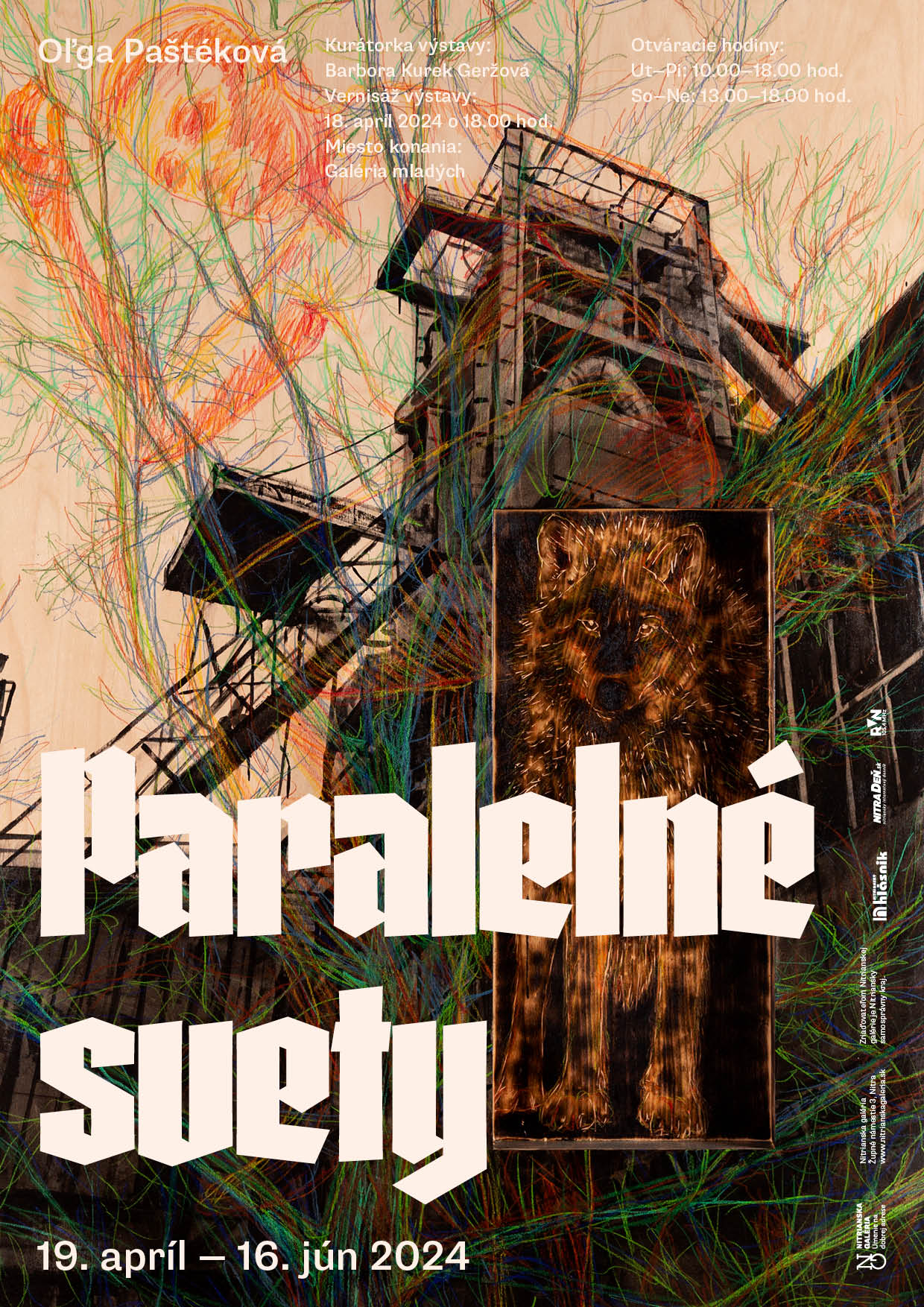
Exhibition poster
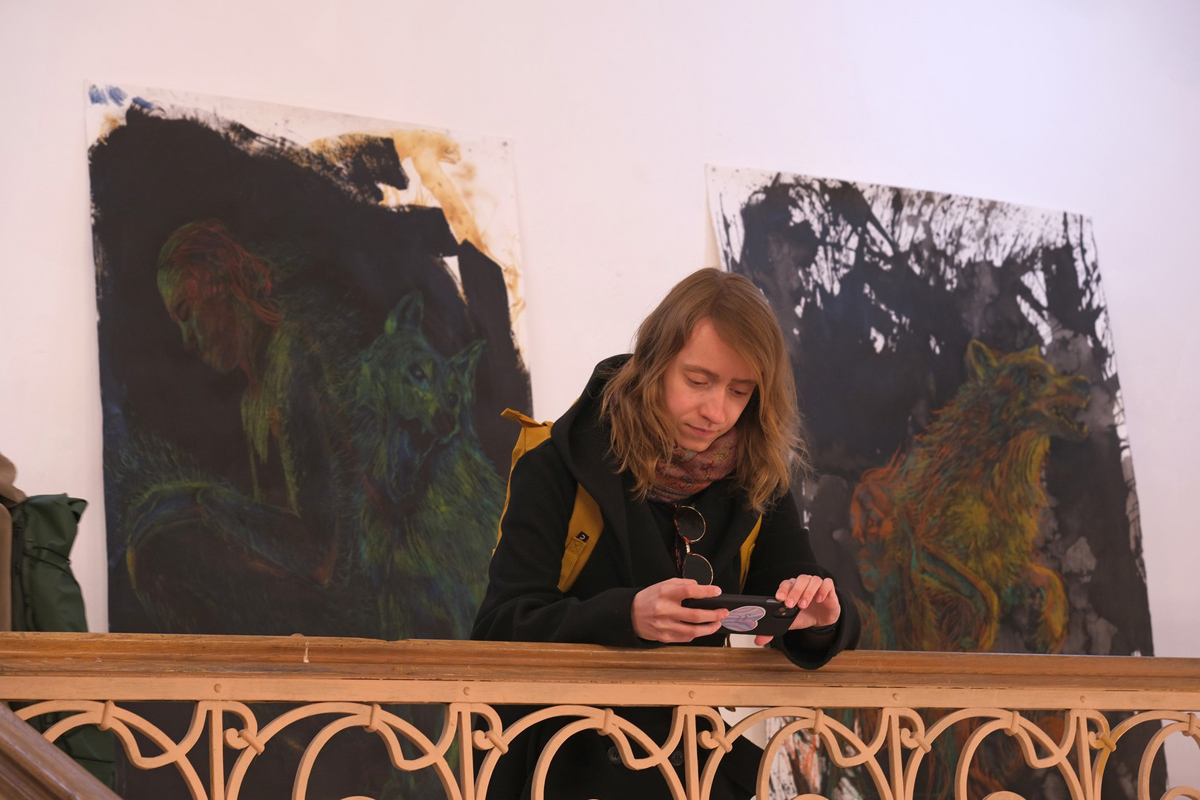
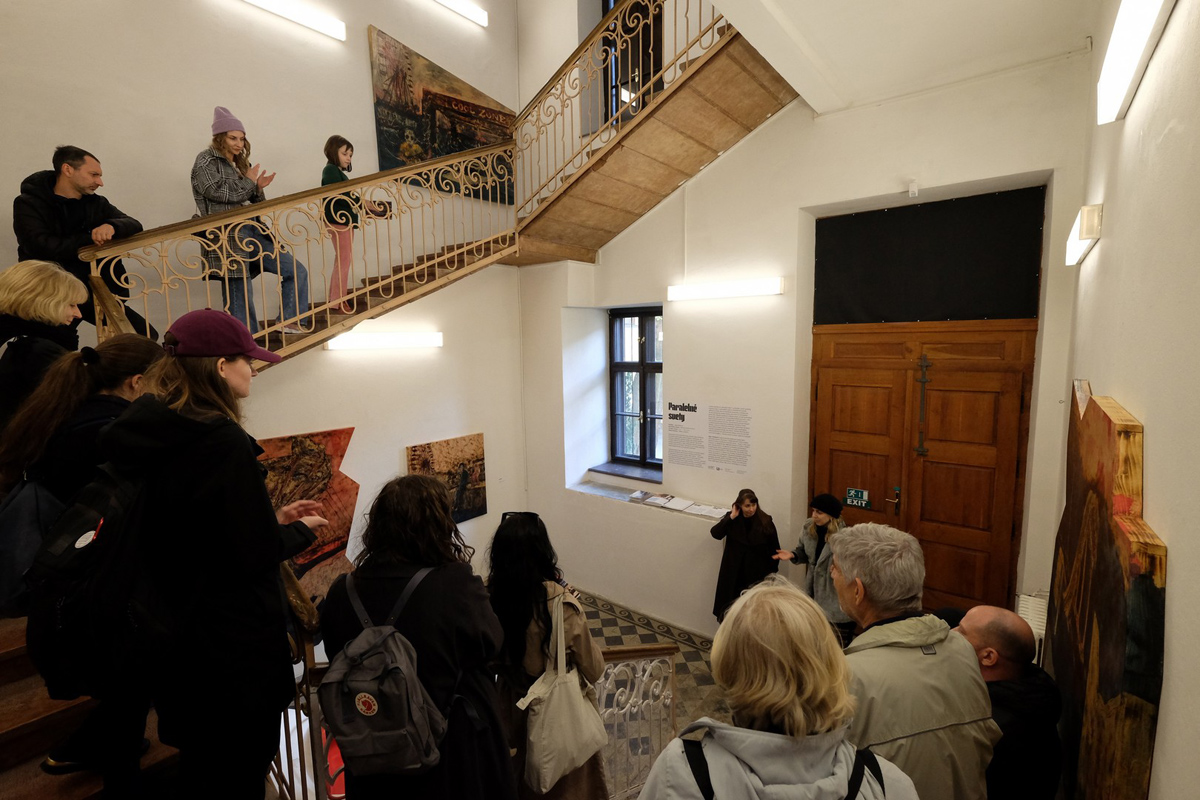
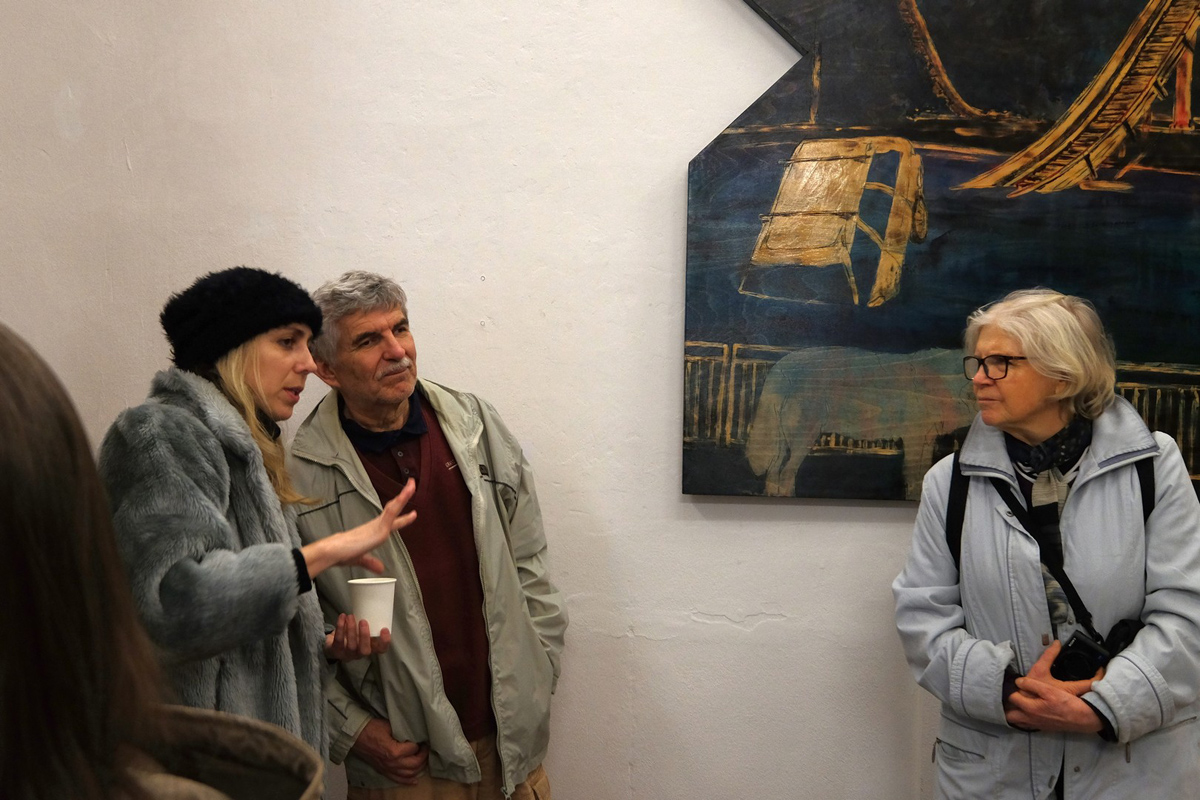
Picture of event

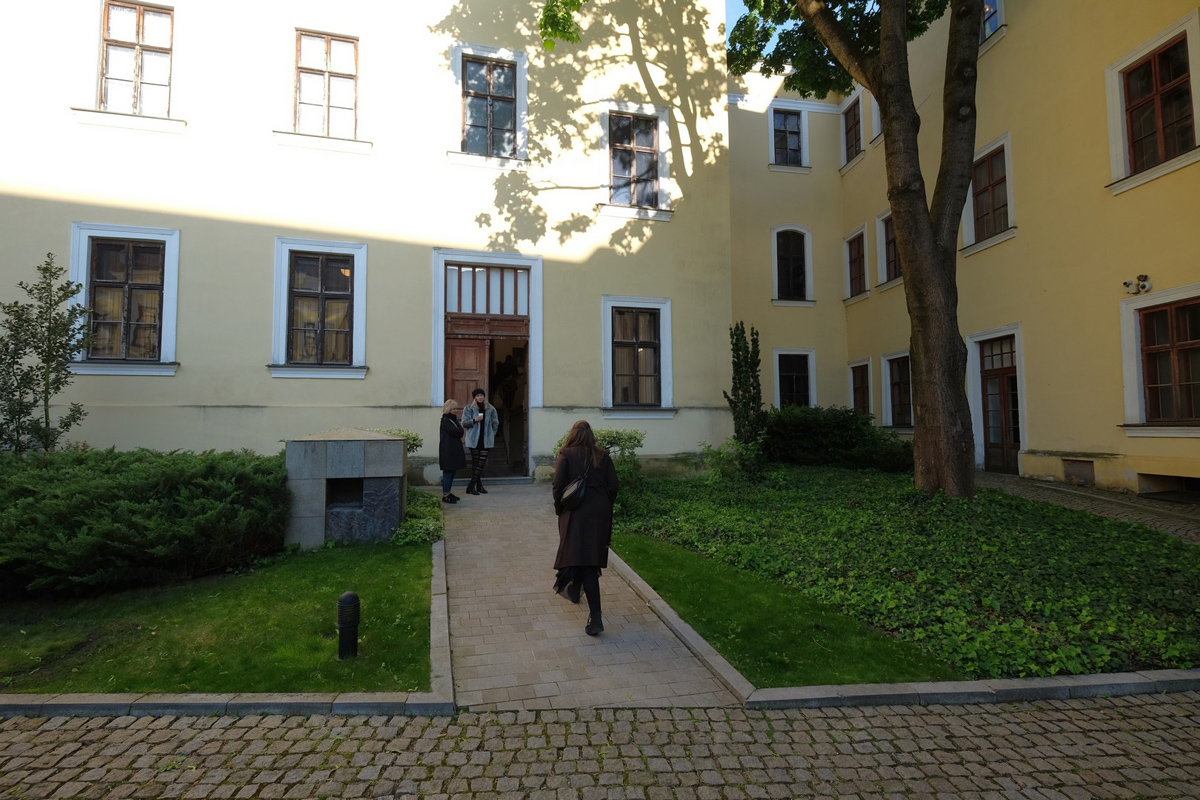
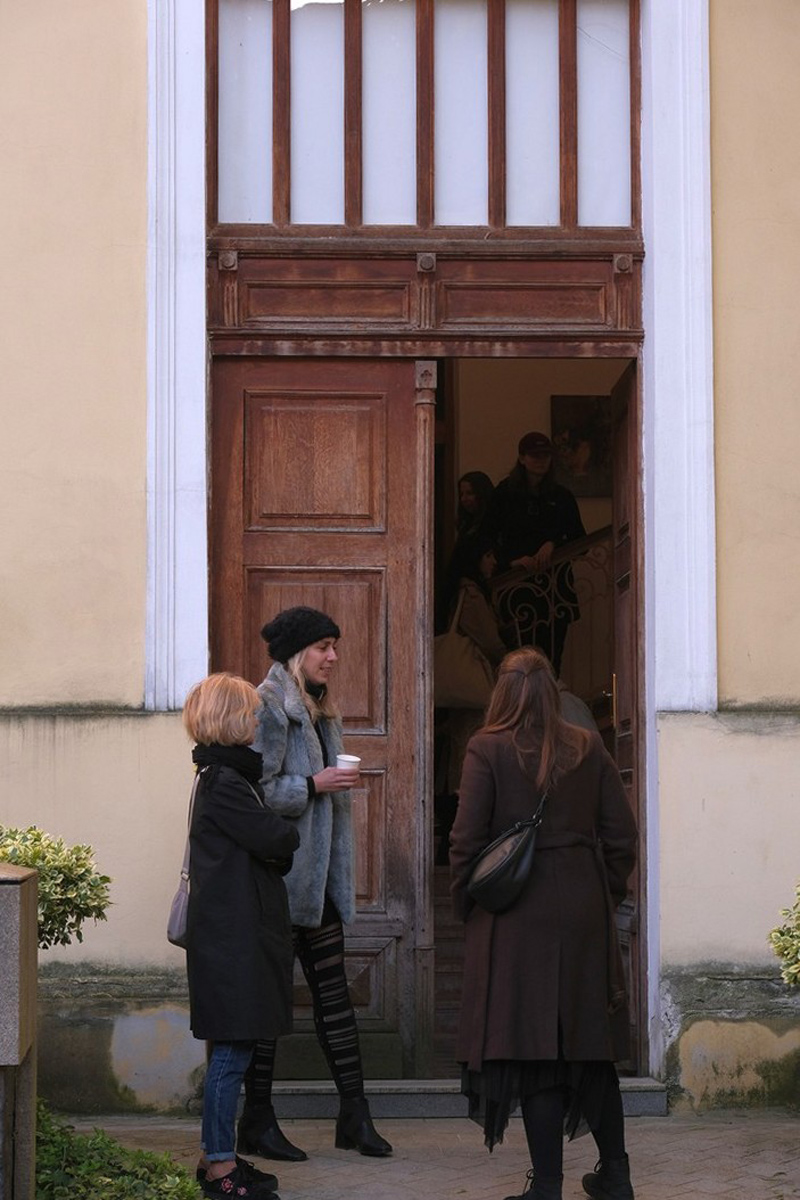
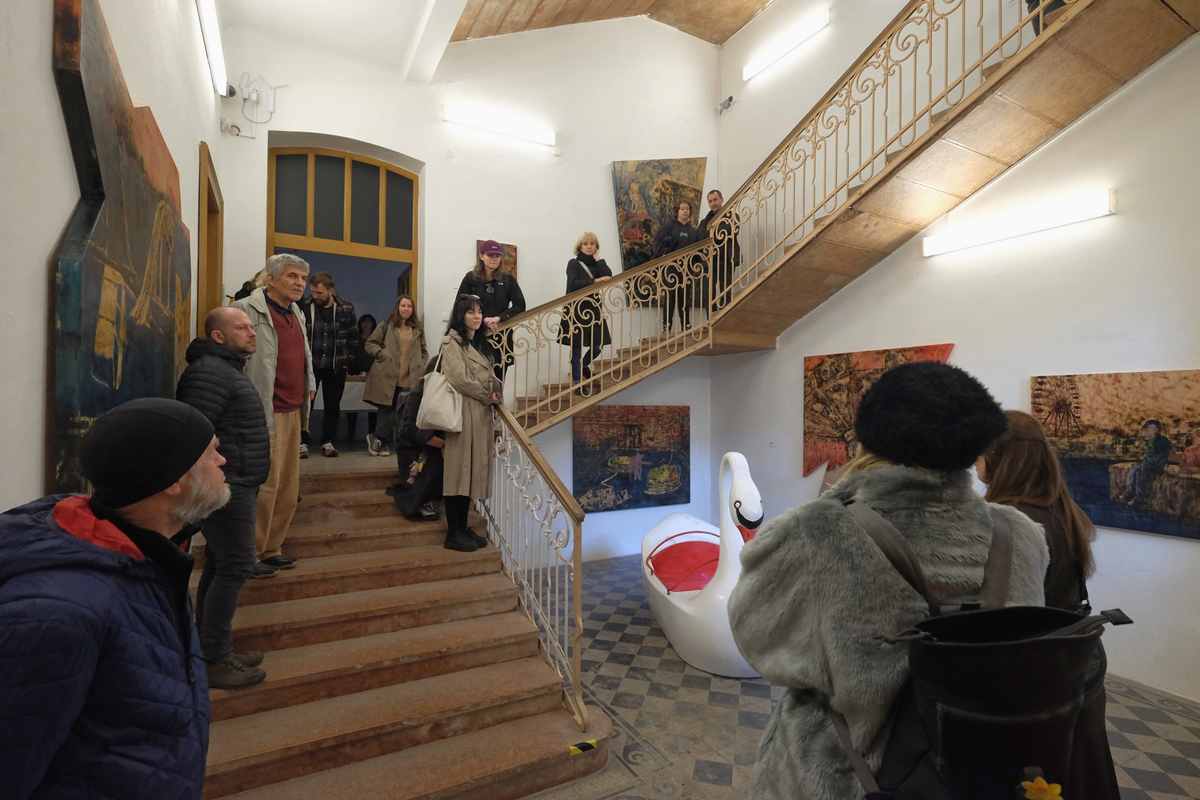
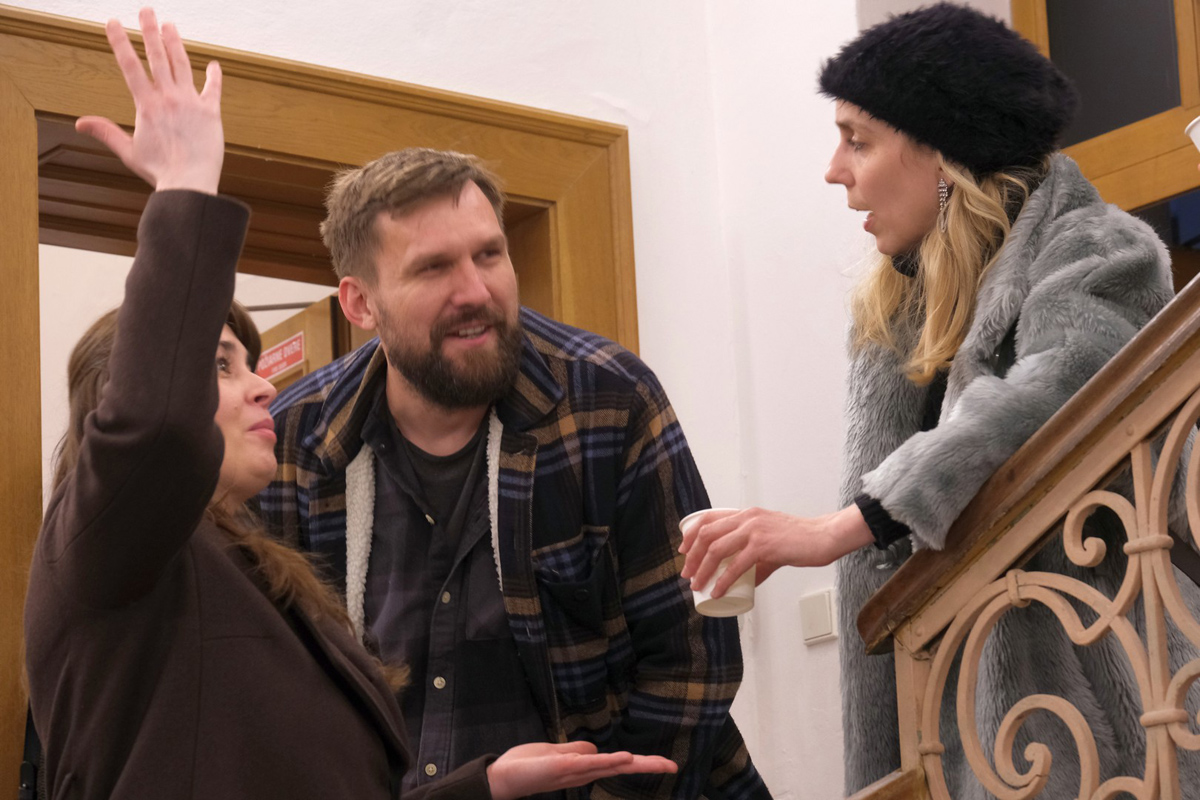
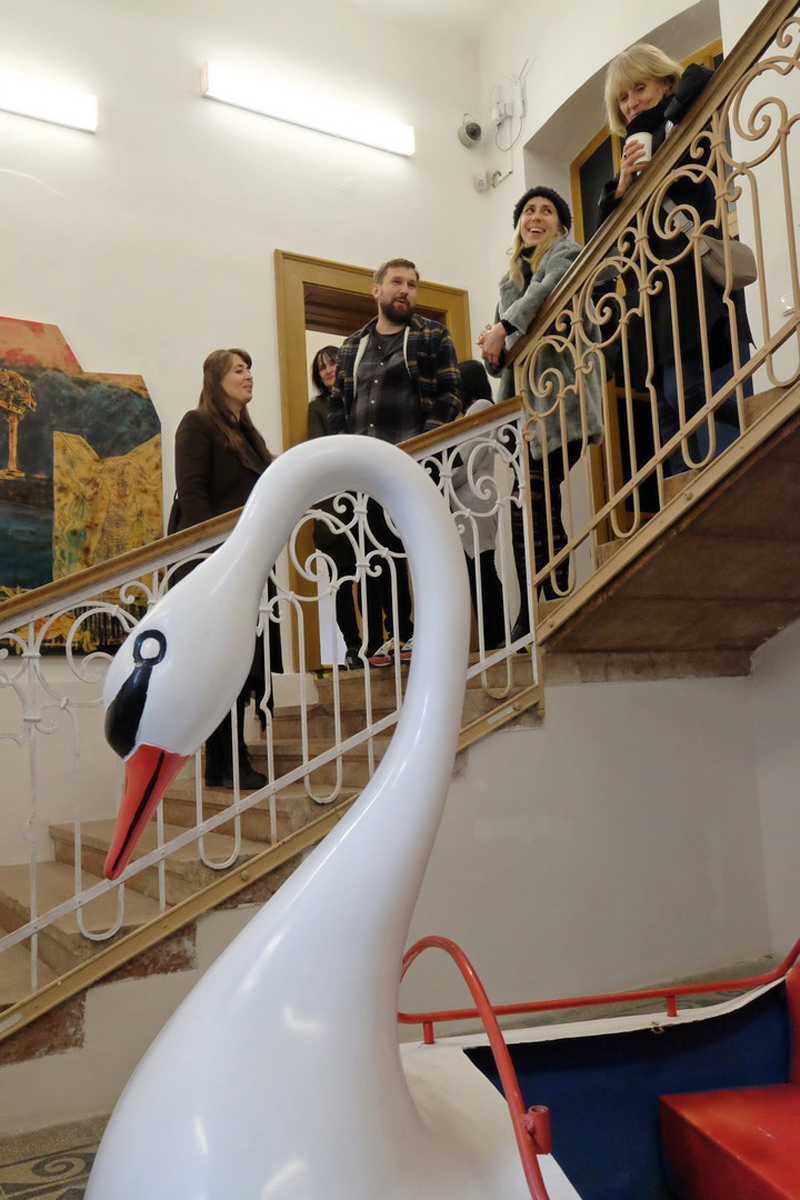
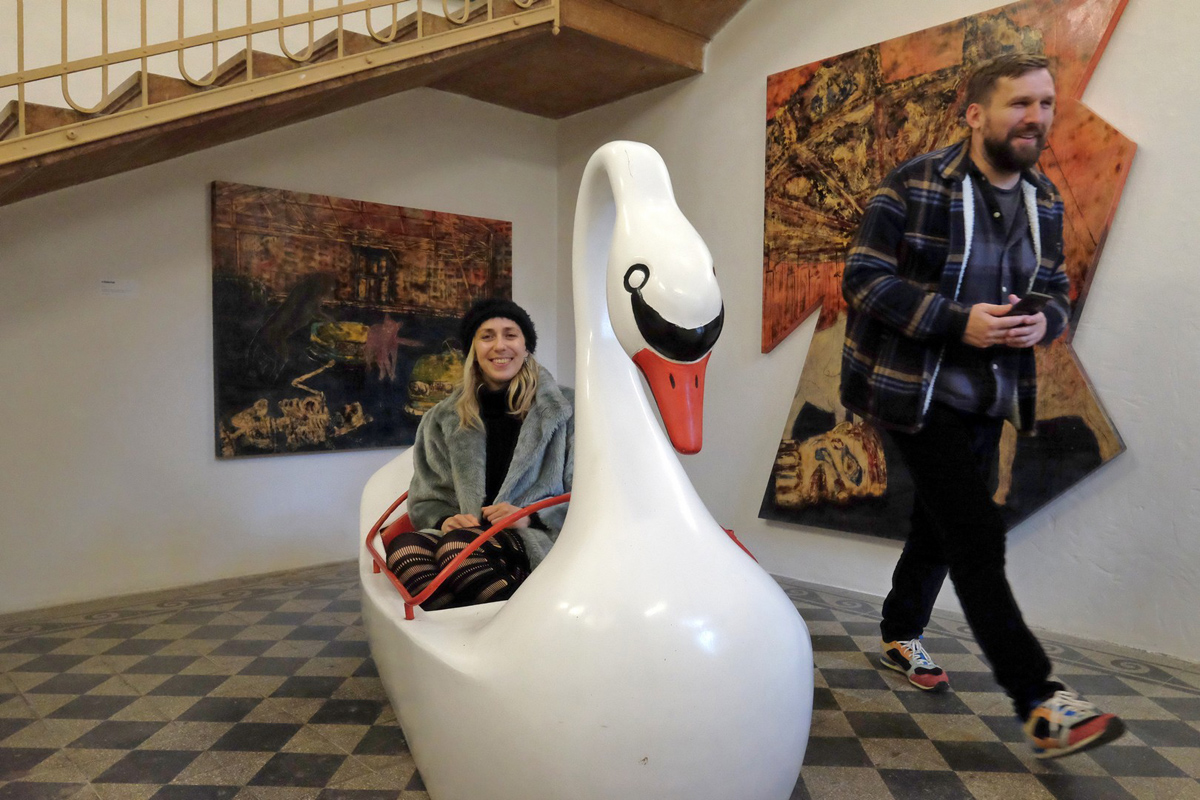
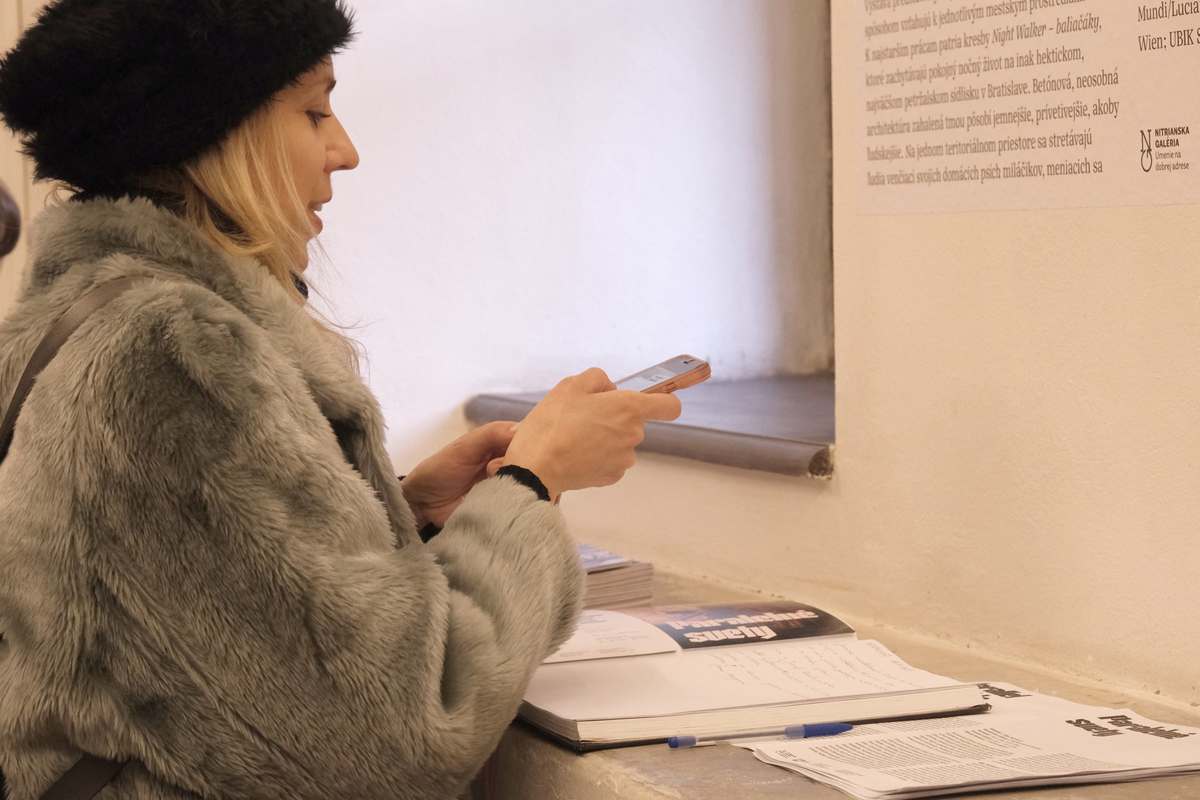
Exhibition opening
Photo: Michal Juhás

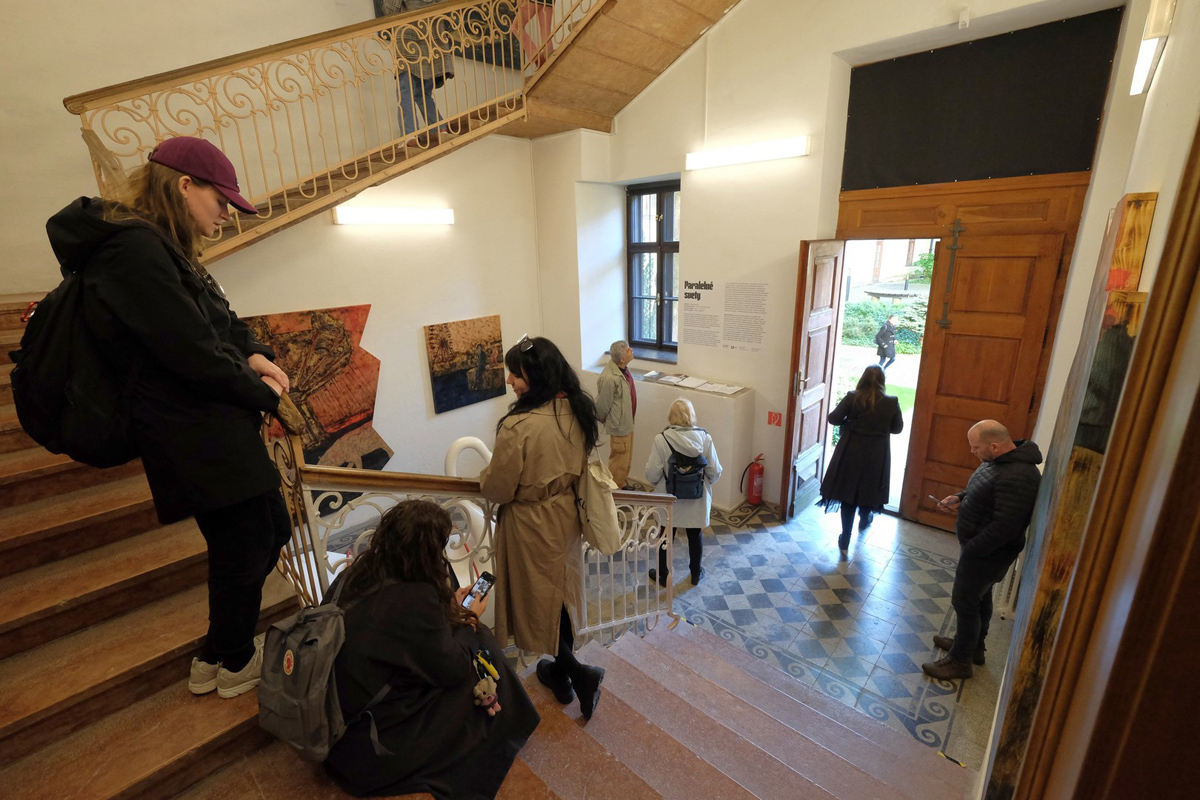
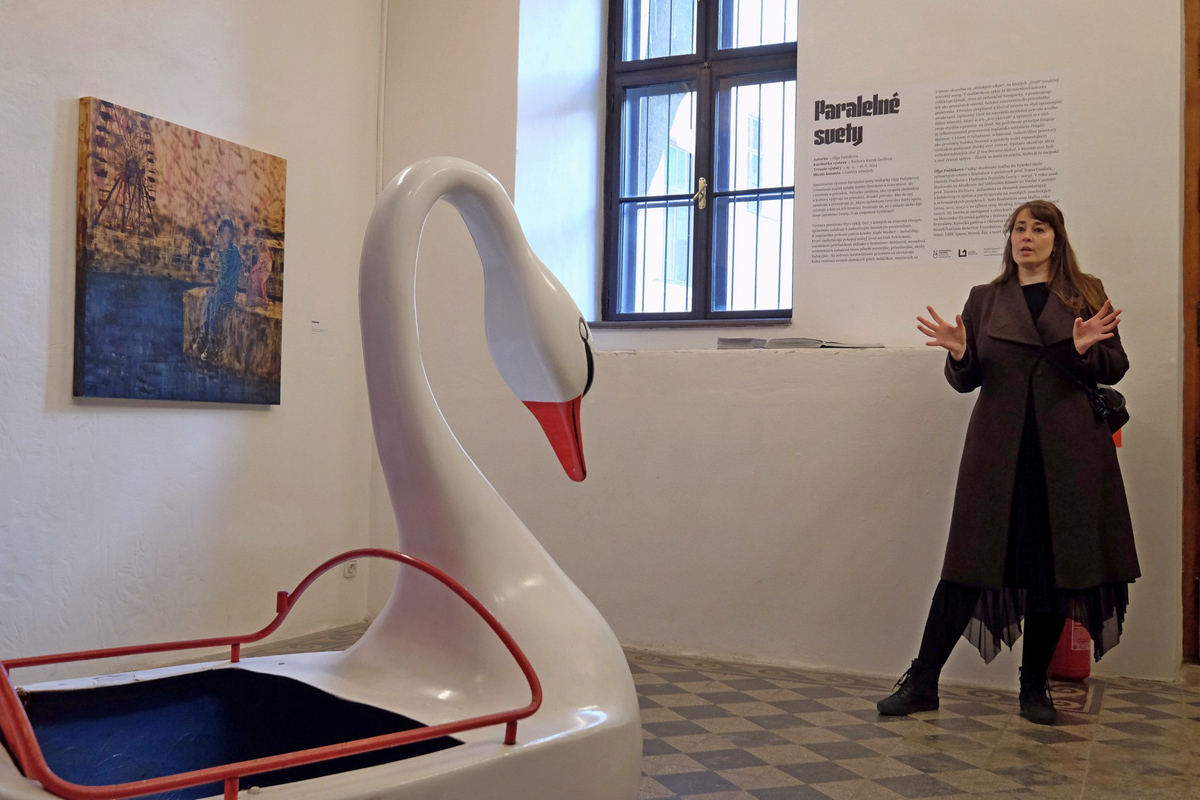
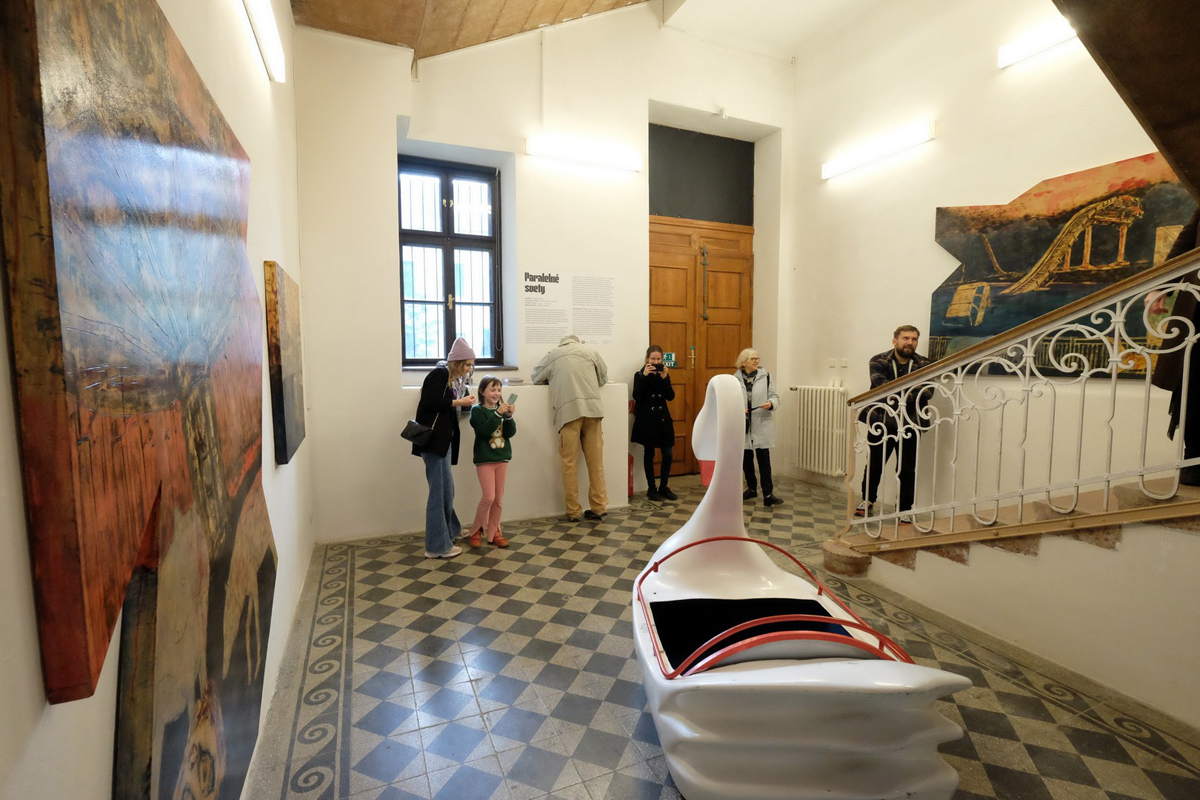
Exhibition views
Photo: Michal Juhás

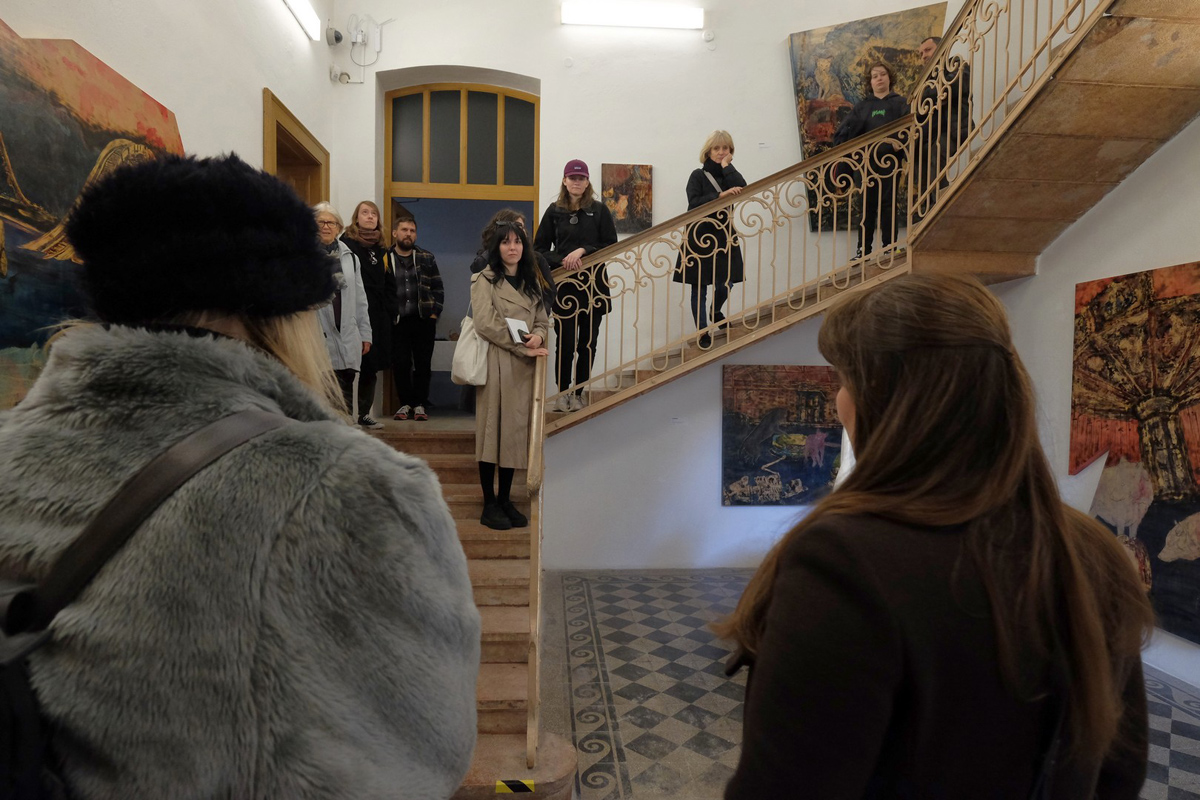
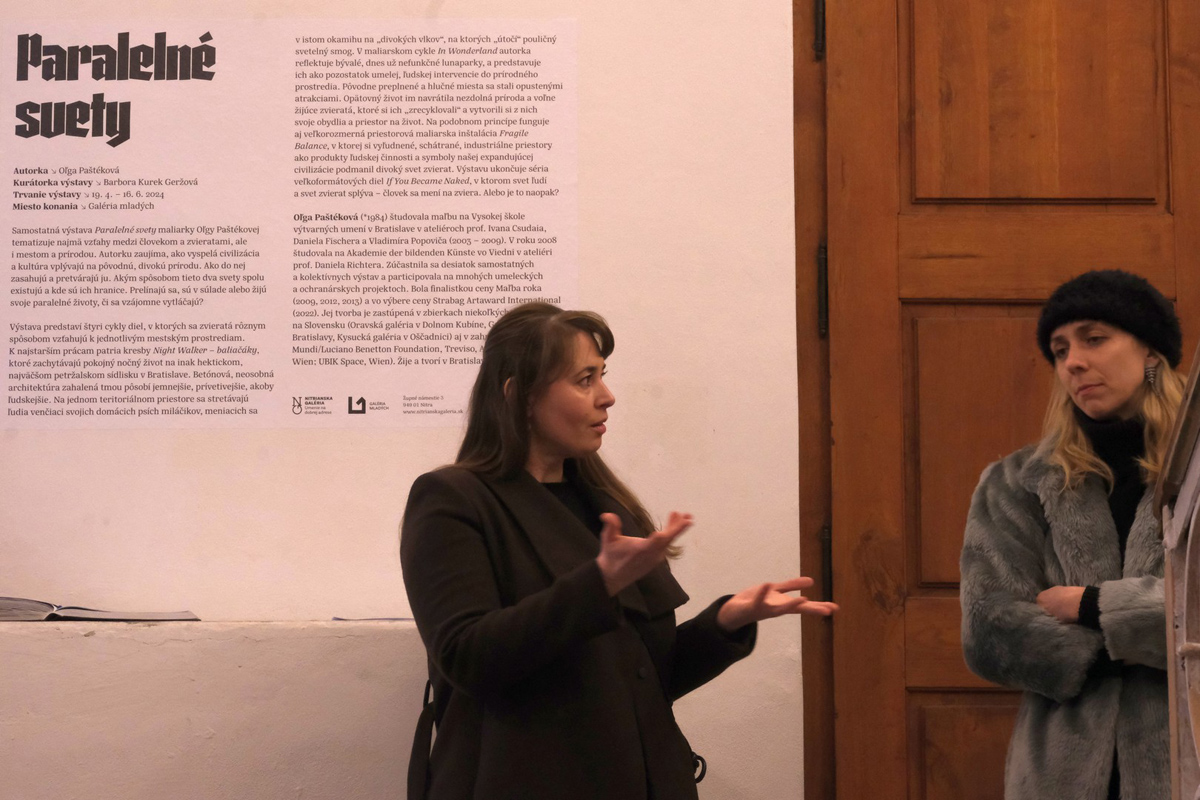
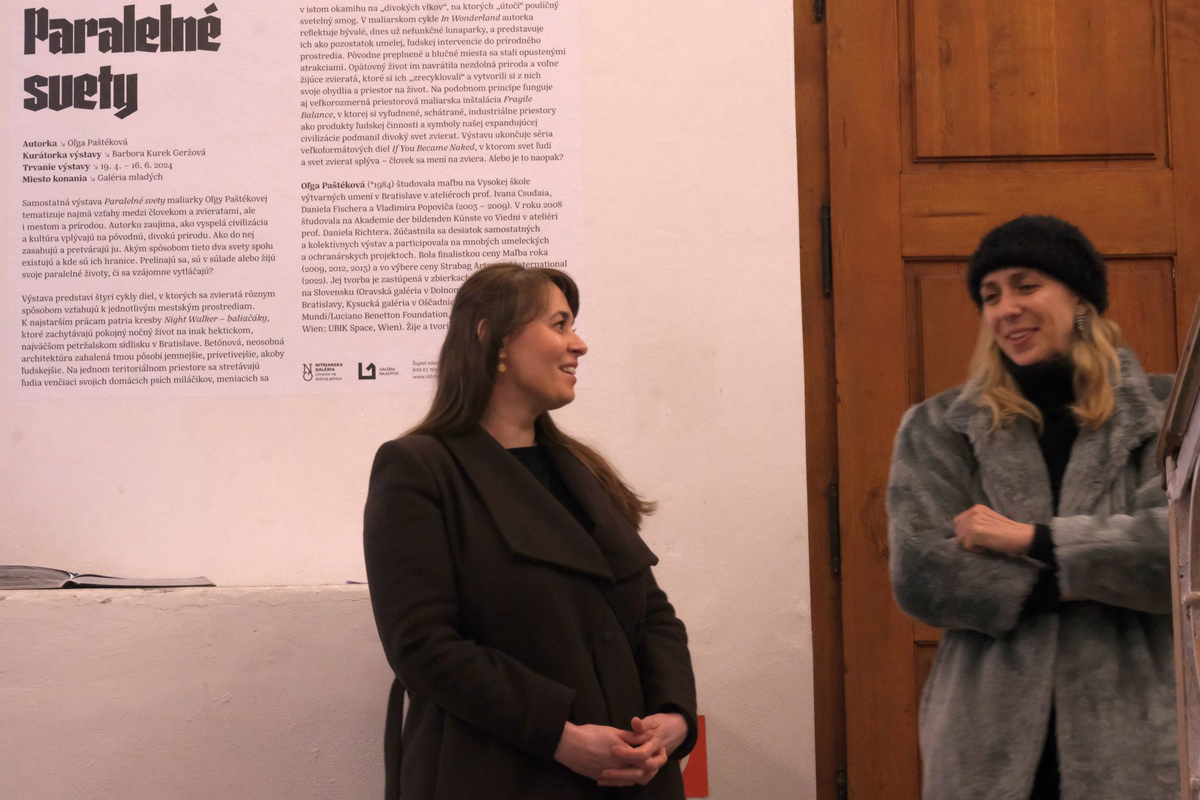
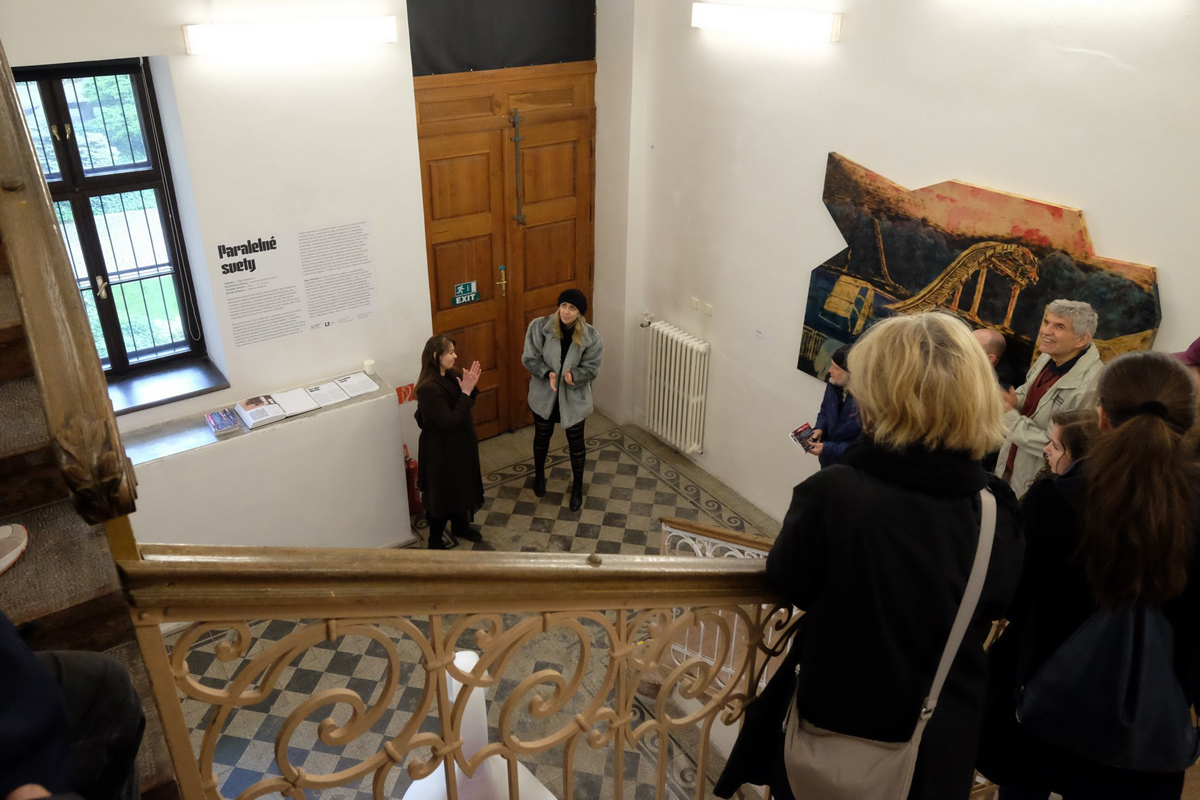
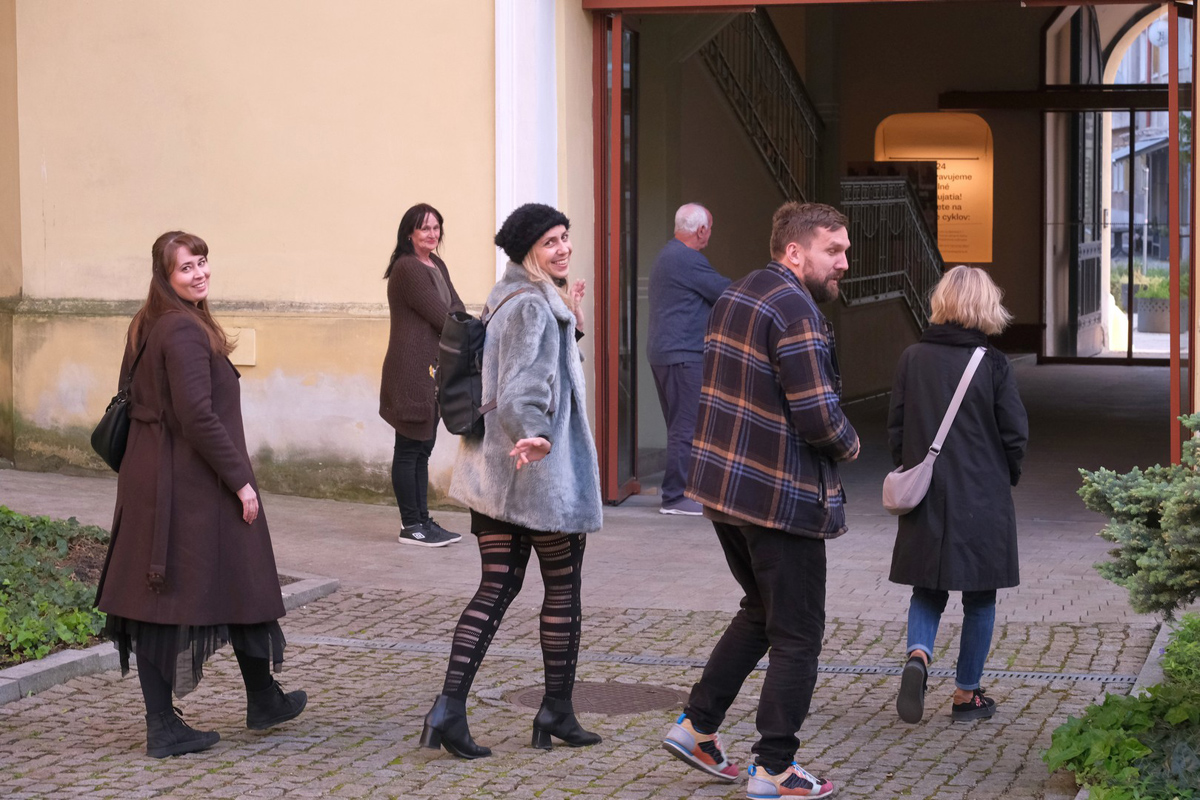
Guided tour
Photo: Michal Juhás